Tourism & Hospitality
Before They Book, Let Them Explore: 3D Experiences for Hotels and Accommodations
Photography can create interest in a property. A 3D experience adds something different: it helps future guests understand the spaces, how they connect and what they can expect before they arrive.
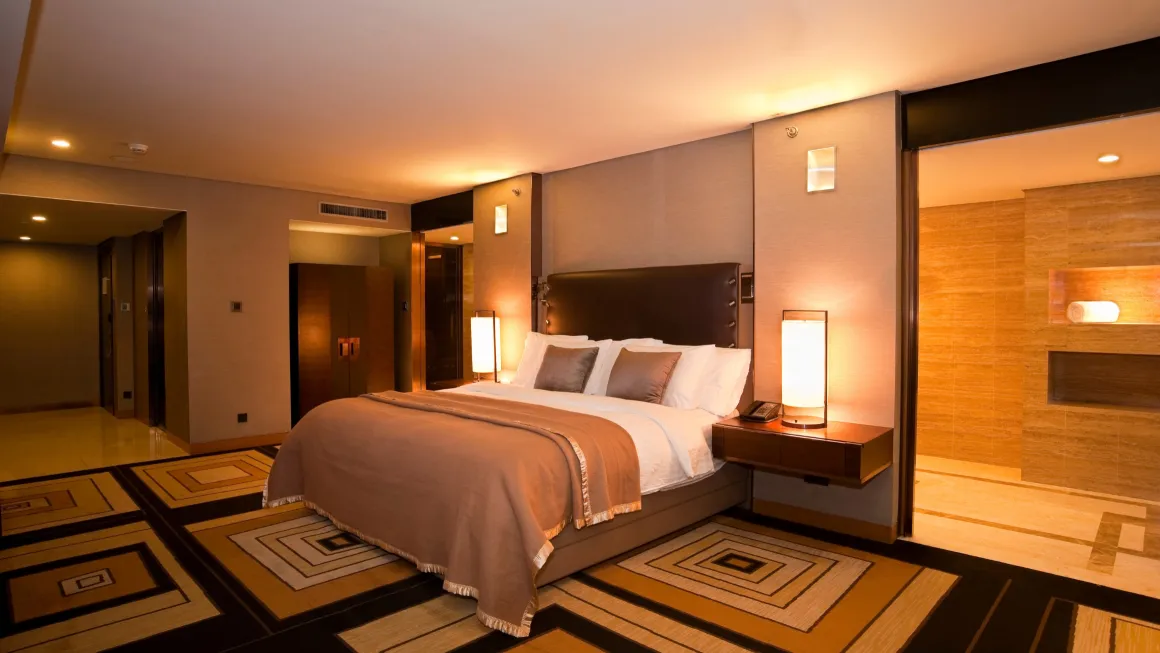
Photography can attract attention. A 3D experience adds context
Choosing accommodation usually begins from a distance. We look at photographs, compare rooms, review amenities and try to imagine what being there will actually feel like.
Great photography can communicate a great deal, but it inevitably selects what we see and from which perspective. A beautiful image of a room may not fully explain how it connects to the bathroom, terrace, common areas or the rest of the property.
A 3D experience adds that spatial dimension. Instead of seeing only selected images, future guests can explore and develop a better understanding of the property before they arrive.
It is not only about showing guestrooms
The experience can include the areas that genuinely help people understand the property: reception, pools, restaurants, terraces, gardens, event rooms or other relevant spaces.
This can be particularly useful when layout matters. A family may want to understand how rooms relate to one another. Someone planning an event may need to see a function room and its access points. Another visitor may simply want to discover what lies beyond the main photographs.
Matterport's different viewing modes can provide additional perspectives on the property, while measurement tools can offer dimensional references when enabled and appropriate.
These are not substitutes for professional measurements. Their role here is to help visitors understand the space.
The experience can explain as well as show
Guests may want to know more than where an amenity is located.
Tags can connect specific places in the experience with useful information, photographs, multimedia or external resources. A guided experience can highlight selected areas before allowing visitors to continue exploring freely.
The goal is not to cover the digital twin with information.
Every interactive element should answer a question or help someone discover something useful.
What if we could see the space without its furniture?
Artificial intelligence is adding new ways to visualize captured environments.
Matterport's Defurnish capability can generate a representation of a captured space without its furniture. It does not mean that the physical property has changed; the result is an AI-generated visualization.
For hospitality, this will not make sense everywhere. A carefully furnished guestroom will often be better understood with its furniture in place.
But it can be interesting in certain situations, such as evaluating a function room, considering a renovation or thinking about a space whose use may change.
Technology provides the capability. Context determines whether it is useful.
Get to know the property before arriving
A 3D experience cannot reproduce the sound of the ocean, the quality of personal service or the feeling of waking up at a destination.
It does not need to.
Its strength is helping people understand the physical environment and make decisions with more information about what they will find.
Photography, video, written content and 3D exploration can work together because they answer different questions.
The guest experience happens at the destination, but getting to know the space can begin long before check-in.
If you would like future guests to explore and better understand your property before arriving, talk to us about digitizing your spaces.
Back to the Blog